Driving behaviour and culture change in systems of people and technology
Our Mission
Our Context
Societies across the globe are dependent on technology, which has transformed how people connect and communicate, how information is disseminated, and how individuals and organisations think and act.
These technologies can be exploited to enhance everyone’s lives – but they can also be exploited by threat actors, from propagandists to cyber thieves, who use them to harm people and societies.
Our Mission
What We Do
We conduct behavioural science-based research and innovation to help organisations in the public, private, and third sectors understand and build enhanced systems of people and technology designed to improve societies, organisations and people’s lives. We build trust and resilience to protect people in a changing threat landscape.
We bridge the gap between the worlds of academia and operations in Government, Commerce and the Third Sector.
FOUNDATIONAL EVIDENCE
Our work is always evidence-based. A strong body of evidence provides a solid foundation for behaviour change interventions and innovations.
We build foundational evidence for clients using the following methods:
Literature review
Open-source data collection
Survey
Interview
Quantitative analysis
Qualitative analysis
Focus group
Experimentation
Natural language processing
Machine learning
Mixed methods analysis
Delphi method
Expert panels
Scenario generation
Horizon scanning
Backcasting and morphological analysis
APPLIED BEHAVIOURAL SCIENCE
We apply our scientific expertise to solve real-world problems with messy and incomplete real-world data.
We achieve this using the following methods:
Training needs analysis
Training delivery
Randomised controlled trials
A-B testing
Measurement and evaluation
Behaviour and culture change design
Stakeholder analysis
INNOVATION
Drawing on evidence bases and/or scaling applied methods, we create novel tools and resources that respond to emerging needs across our domains of expertise.
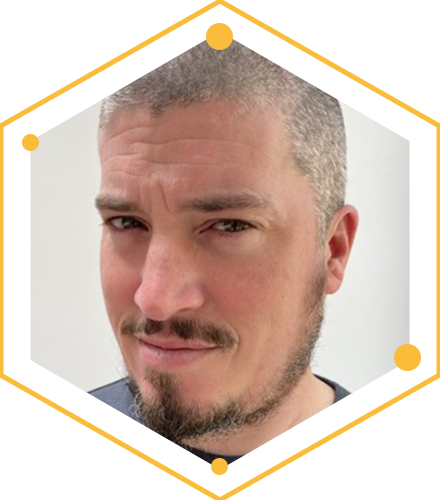
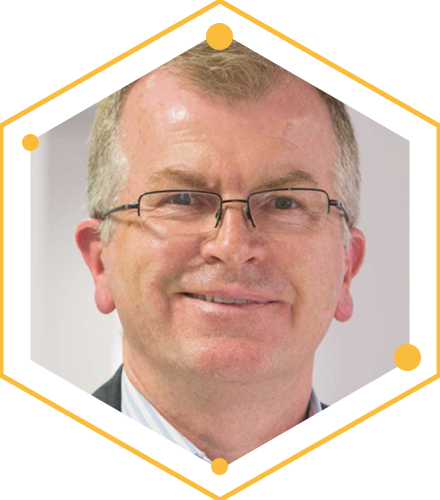
Justin Hempson-Jones is Managing Director of Social Machines, and a behavioural scientist specialising in the theory and practice of social influence and behaviour change for defence and security. Justin holds a BSc in psychology and artificial intelligence from the University of Essex and an MPhil International Relations from the University of Oxford. He has worked for New Scotland Yard, the UK Defence Science and Technology Laboratories, and the Foreign, Commonwealth and Development Office. Justin’s last job in government was to lead and develop a behaviour change capability to support UK foreign and security policy objectives. He is the author of ‘Influence: understand it, use it, resist it’ published in 2024 by Harper Collins.
Midori Nishioka
Senior Behavioural Scientist
Midori has over 10 years of experience in research focusing on building positive organisational environments, promoting safety, fairness, and EDI (equity, diversity, inclusion). She completed her master’s and PhD in industrial-organisational psychology at the University of Waterloo, Canada. She has worked with the public sector on projects related to cybersecurity culture, psychological resilience training, narrative persuasion, mistreatment of LGBTQ+ communities, and intersectional analysis. She has also been working with a non-profit to develop and evaluate a behaviour change health intervention for young people. Midori is skilled in quantitative and qualitative methods, including literature reviews, meta-analyses, experiments, surveys, and interviews.
Joseph Dingley
Senior Behavioural Scientist
Joe’s current focus is on understanding disinformation, international relations and audience analysis through the lens of behaviour change. He holds a degree in Psychology from Brunel University London and a master’s degree in Comparative, Evolutionary and Developmental Psychology from St. Andrews university. This eclectic background led to Joe’s involvement in designing research paradigms for hard-to-reach populations of humans – and primates and cephalopods too. This experience in developing methods for understudied populations and phenomena is crucial for how Joe solves behavioural science problems. After all, once you have designed methods to understand cephalopod intentions through chromatophores (natural cell pigmentation camouflage) human behaviour suddenly seems a lot easier!
Ethan Frankland
Marketing and Market Engagement Lead, Culturlabs
Ethan brings a combination of behavioural science grounding and hands-on commercial experience to the Social Machines team. With a background in Psychology and Anthropology from Durham University, Ethan has worked across AI, cybersecurity and organisational strategy. He is passionate about the intersection of human behaviour, culture and technology, and the role that genuinely evidence-based approaches can play in building organisations that are both more secure and more human.
Mo Amara
Behavioural AI Engineer
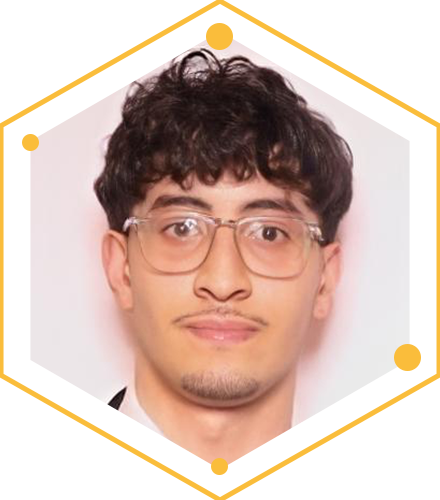
Mo works at the intersection of human cognition, behavioural science and artificial intelligence. He holds an MSci in Experimental Psychology from the University of Oxford, where his research used reinforcement learning and computational modelling to investigate how AI can accelerate human learning. His wider work explores the two-way relationship between human and machine cognition, examining how AI can enhance human learning and decision-making, and how insights from human cognition can inform more capable, intelligent and human-centred AI systems. His experience spans behavioural modelling and cloning, reinforcement learning, large language models and vision-language models.
Finn Larsen
Strategy Adviser
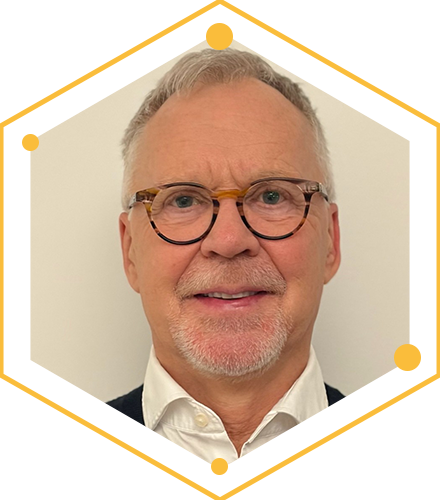
Finn has demonstrated proven success in driving transformative initiatives and fostering worldwide growth in consulting, manufacturing, O&G, energy (wind/solar), pharmaceuticals, manufacturing, aeronautics, defense, and rail industries. He is adept at navigating complex landscapes, forging key partnerships, and adapting to industry trends. He has a strategic mindset and a commitment to service. He’s resourceful in strategic planning and execution, aligning business goals with technological solutions to drive process improvements and ROI and agile in navigating the intricacies of international business cultures and fostering alliances that drive global success.
Matthew Foxwell
Behavioural Scientist
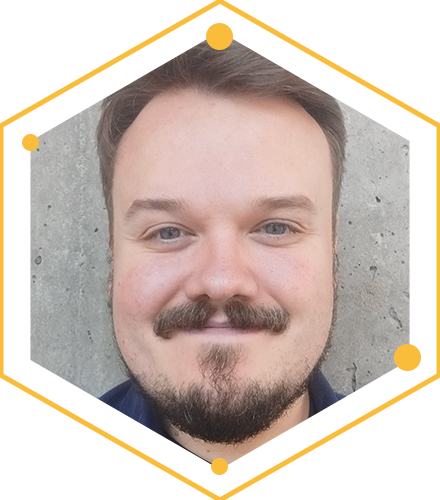
Matt specialises in how people interact with technology and complex organisational systems. He applies behavioural science to help organisations navigate AI adoption, improve organisational resilience, and generate effective human–machine teams. Matthew completed his PhD in Cognitive Neuroscience at the University of York, where he developed AI models to study individual differences in how people perceive and understand complex real-world environments. This gave Matthew a close-up view of where human and AI understanding of the world align and diverge, which he now applies to his work on human–AI teaming. Prior to joining Social Machines, he worked across healthcare, public policy, and social research, delivering projects for clients including the NHS, HMRC, the Department for Work and Pensions (DWP), and Royal London.
Nick Wilding
Director – Culturlabs
Nick has worked in security, risk and resilience for over 20 years, working with hundreds of organisations, on the frontline and in the Boardroom, in developing positive security cultures and in mitigating cyber risks. He first worked for Detica (now BAE Digital Intelligence) across senior cyber security marketing, product development, thought leadership and market engagement roles; then became General Manager of Cyber Resilience at Axelos Global Best Practice where he led the RESILIA cyber resilience best practice training portfolio. In 2021 Nick became Chief Innovation Officer at Cyber Risk Aware, a human risk management platform provider, where he led all market engagement and sales activities. As Director of Culturlabs he leads the development and launch of new, evidence based, organisational culture and behaviour change products and services.
Luis Felipe Costa Sperb
Associate
Felipe is an empirical economist and research methods expert with a PhD (University of Southampton) and experience gained at the intersection of risk, data analytics, and behavioural and decision sciences. His work has focused on designing innovative methodologies and tools aimed at supporting organisations’ strategic direction, operational resilience, governance practices, and the creation and maintenance of integrated risk cultures. Currently, he is also a Senior Researcher and Teacher at the University of Edinburgh, where his research focuses on identifying new information sources to classify and quantify risk behaviour and culture – and consequently to improve operational risk management procedures, inform policy, and develop effective behavioural interventions to improve decision making.
Selena Jones
Behavioural Scientist
Selena is interested in the intersection of technology and the psychology of organisations. She holds a BSc in Psychology at University College London and an MSc in Psychology from London School of Economics and Political Science. Her research projects have included investigating the impact of anthropomorphism on trust in AI and exploring workforce retention issues through a psychosocial lens. Selena has studied organisational development and transformation in the workplace and has worked with organisations on their EDI initiatives.
Societies across the globe are dependent on technology, which has transformed how people connect and communicate, how information is disseminated, and how individuals and organisations think and act.
These technologies can be exploited to enhance everyone’s lives – but they can also be exploited by threat actors, from propagandists to cyber thieves, who use them to harm people and societies.
We conduct behavioural science-based research and innovation to help organisations in the public, private, and third sectors understand and build enhanced systems of people and technology designed to improve societies, organisations and people’s lives. We build trust and resilience to protect people in a changing threat landscape.